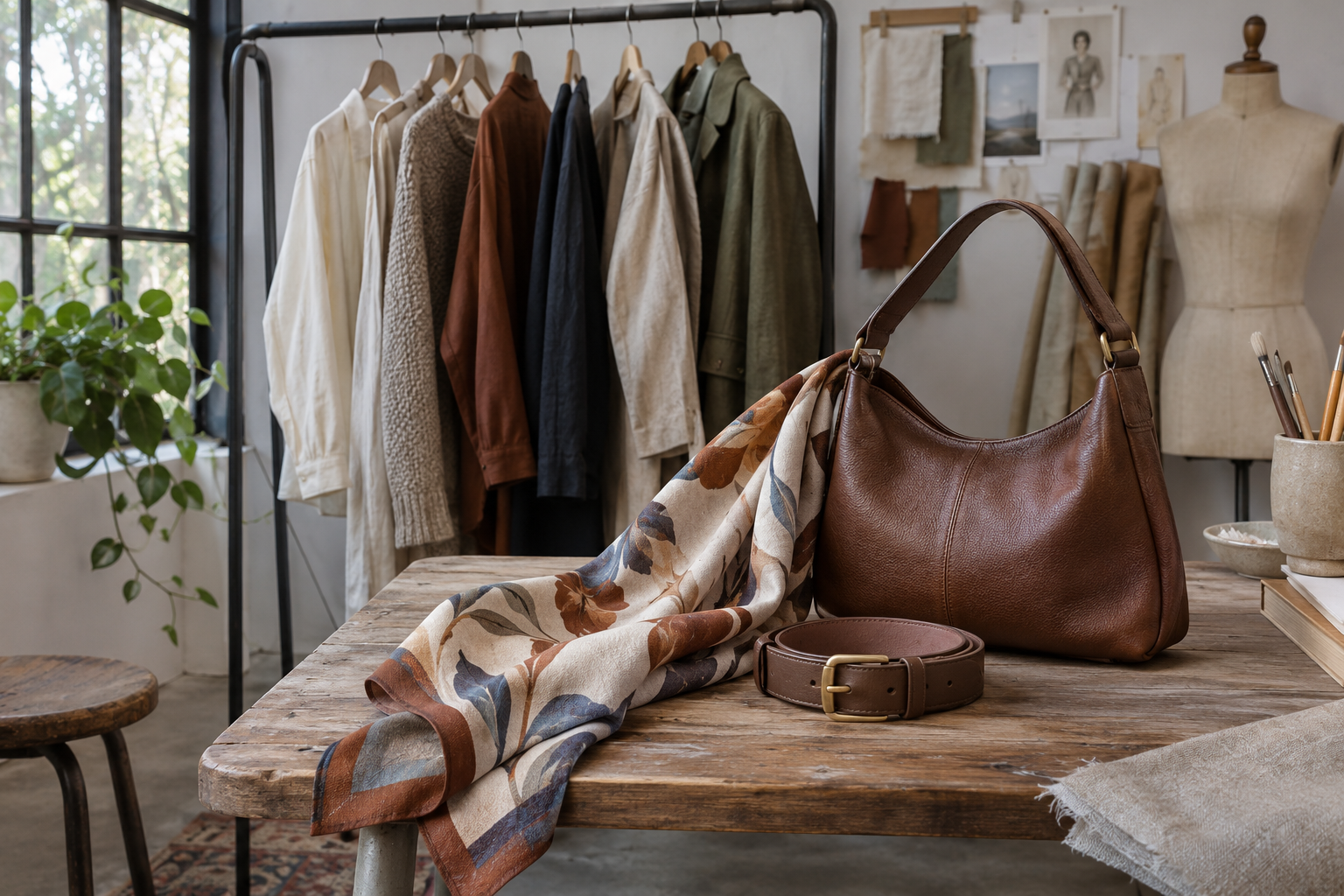
Begin with the clothing collection, then select accessories that have a clear role in its outfits and retail presentation. Compare the colours, proportions and intended customer across scarves, belts, bags or hair accessories. A coordinated range is a development decision: it still needs individual product specifications and samples.
Map accessories to actual clothing looks
Choose a small set of representative outfits. Note which need a colour accent, a functional bag or a finishing detail. A scarf may provide print near the face; a belt may change the silhouette; a bag must work with the intended use as well as the outfit. These are planning options, not claims about which category will sell best.
Compare suppliers by category and development role
Ask whether each exhibitor presents finished collections, can discuss modifications, or needs a full brief before assessing a private-label request. Record the actual material, size and construction of the sample rather than assuming that a matching colour makes two products compatible. IFEMA lists BISUTEX as a jewellery and accessories fair and gives 4–6 February 2027 as its dates; its previous-edition material lists bags, scarves and hats. Confirm the current exhibitor list and individual offers before travelling.
Turn a look into a usable brief
For each accessory, attach the relevant garment reference and state the intended customer, season, colour target, material preference and required dimensions. Mark whether the supplier is being asked to propose a style or develop a supplied design. Confirm packaging and labelling requirements separately; do not assume one product’s specification transfers to another.
Next step
Select three representative outfits and write one accessory role against each before approaching suppliers.
Buying questions
Should every accessory use the same material?
No. Select materials for the product and intended use, then review the overall look together.
Does an exhibitor’s display confirm private-label availability?
No. Ask the exhibitor what changes or development work it can assess.
What should accompany an outfit reference?
Include the intended customer, season, colour target and the role of each accessory, together with proposed dimensions and material preferences.
How can a buyer check a coordinated range?
Review physical samples together with representative outfits and record any colour, scale or material changes before approval.
Sources
Related product categories
Scarves and shawlsHats and headwearReview your project
Share your product, market and requirements to discuss the next step.
Discuss your project →