
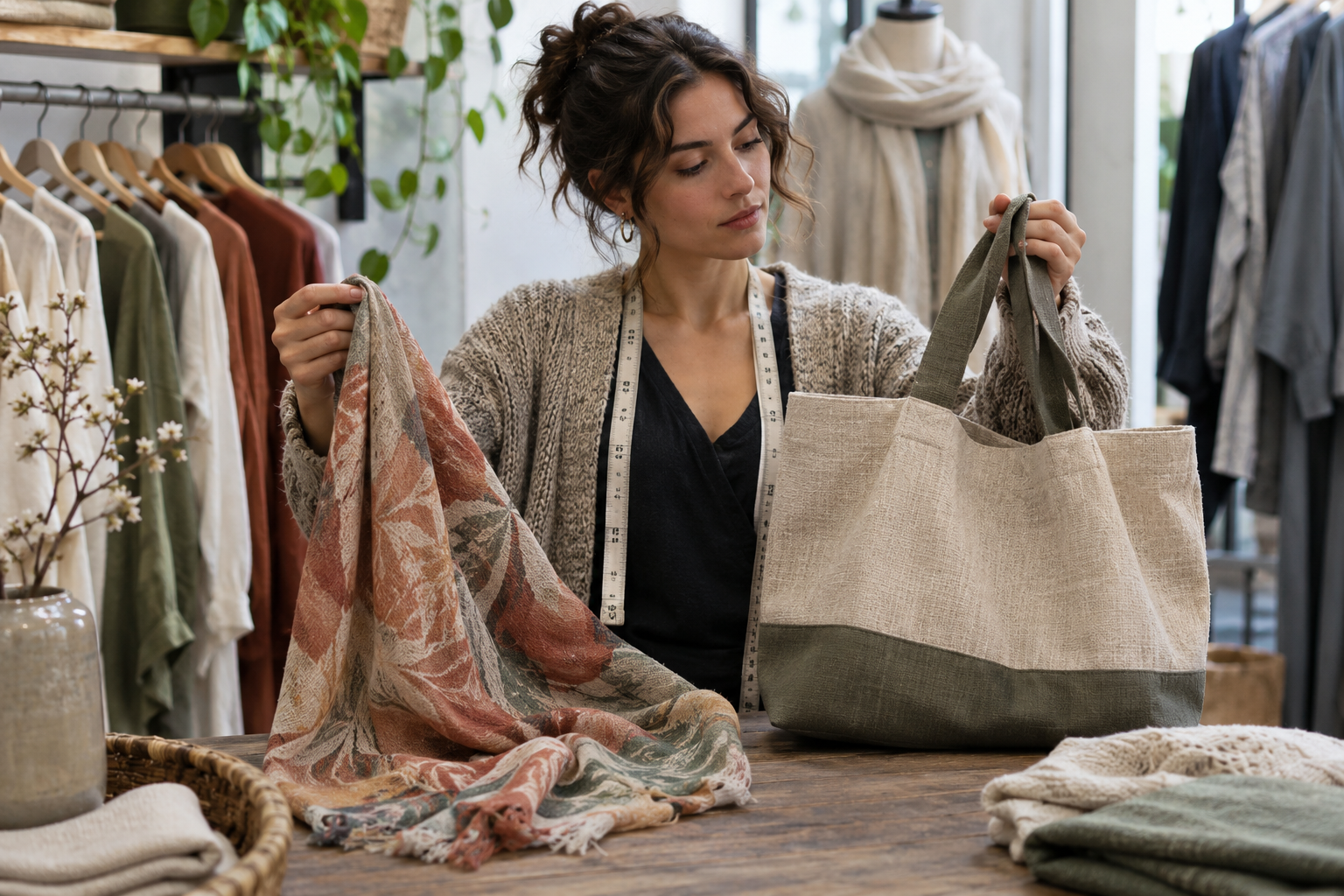
Choose accessories according to the job they perform in your store. A gift shop may need a product that is easy to present as a gift; a clothing store may need an item that completes an outfit; a boutique may want a small group of styles that works together. Use those different jobs to build a first selection, then review the result against your own customers and space.
Gift shops: make the occasion and presentation clear
Start with the recipient and occasion. A scarf or tote can be assessed for its appearance, price positioning and presentation alongside other gifts. Before ordering, confirm whether the proposed packaging fits the display and what information must appear on the item. Faire’s October 2026 guide includes scarves and tote bags among items frequently ordered by gift shops on its platform; it does not establish how they will perform in your store.
Clothing stores: test the accessory with the outfit
Lay the proposed scarf, belt or bag beside the garments it is intended to complement. Check colour, scale and styling rather than approving the accessory in isolation. Give the supplier garment references and explain whether the item should coordinate with one look or work across several. Faire lists scarves, belts and crossbody bags among the mix ordered by clothing stores on its platform.
Boutiques: give each style a clear role
A focused collection can make the range easier to present. For example, compare two bags by intended use, size, closure and carrying method rather than buying several designs with no distinct purpose. Check the sample and display space before deciding how many styles to carry.
What should go into the first brief?
State your store type, market, intended season, customer, style references and packaging needs. Ask which colours, sample changes and quantities can be evaluated for the actual products. TU supports accessory development and sample coordination; specific conditions depend on the project.
Next step
Select one existing display and list the accessories that have a clear role beside it. Share that list with your supplier for a focused sample discussion.
Buying questions
Can the same range work in every shop?
It may be a starting point, but check it against each store’s customer, products and space.
Do Faire’s order conditions apply to TU?
No. They describe Faire’s platform; TU evaluates the specific product and order structure separately.
What information helps a supplier propose a range?
Provide the store type, target customer, season, display space, price positioning and references, then discuss the available sample options.
How should packaging be evaluated?
Check the sample packaging against the display, intended use and target market. Confirm labelling and presentation requirements for the actual order.
Sources
Related product categories
Scarves and shawlsHats and headwearReview your project
Share your product, market and requirements to discuss the next step.
Discuss your project →