
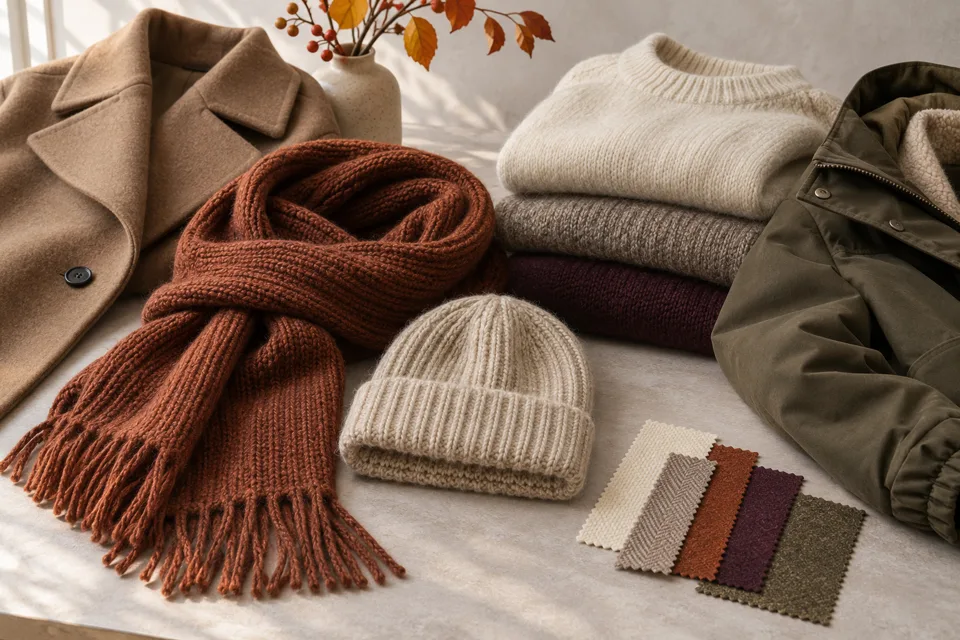
Start with the planned collection phases, then map each accessory to a clothing group, intended customer and decision date. A scarf or hat may support more than one outfit, but the material, colour, sample and delivery requirements still need to be agreed for the specific item. Build the plan around the buyer’s actual calendar, not a presumed industry schedule.
Map the collection before selecting products
List the clothing groups planned for each phase, their colour references and the intended styling role of accessories. For example, a scarf might introduce a pattern alongside knitwear, while a hat may coordinate with outerwear. Check actual samples together before concluding that colours or textures work. Sainsbury’s describes its Tu AW26 womenswear range through monthly design directions covering clothing and accessories. That is one retailer’s presentation, not evidence of market-wide demand.
Identify decisions and dependencies
For each accessory, record the planned launch window, sample approval date, target dimensions and materials, packaging needs and responsible team. Ask suppliers what they need to assess the design and timeline. The sample, material availability and approval process can affect timing, so confirm a project-specific schedule rather than assuming a standard lead time.
Review the range across phases
Use a simple matrix to compare each accessory with the garments it is intended to support. Identify a product that has no clear role or duplicates another, and ask whether it should be revised or removed. If a garment colour changes, check the linked accessory sample and approved references before updating the range.
Next step
Share your collection phases, clothing references and accessory decision dates with the development team and identify which samples need to be reviewed together.
Buying questions
Must each clothing phase have its own accessory?
No. One item may work across several looks if the samples and buyer’s plan support it.
Can a launch calendar guarantee delivery?
No. Confirm materials, approval steps and the supplier’s actual schedule for the project.
Sources
Related product categories
Scarves and shawlsHats and headwearReview your project
Share your product, market and requirements to discuss the next step.
Discuss your project →