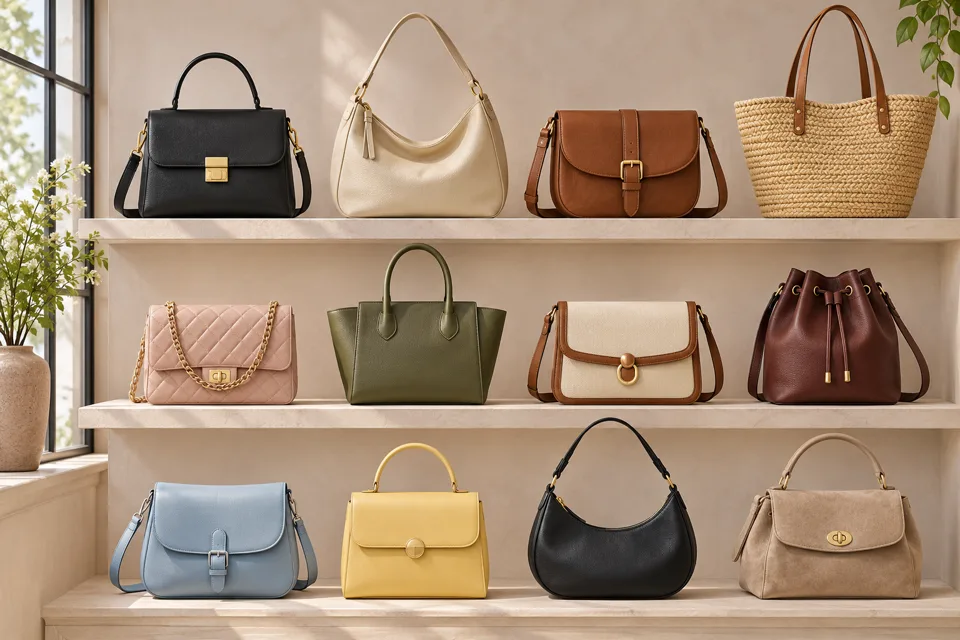
Group bags by the use and information that help customers choose. Show the carrying method, opening and relative size clearly, then make the actual material and care information available for each product. A store opening or brand presence does not by itself reveal purchasing needs or prove a display will sell.
Organise by customer task
Identify whether the customer is choosing for daily carrying or an occasion, and separate styles with distinct functions. Plan enough space to show the opening and strap without obscuring neighbouring products. Use the store’s own customer and merchandising information rather than assuming that a luxury example applies to all stores.
Give staff and shoppers consistent details
For each approved sample record dimensions, carrying options, closure, materials and any care information supplied for that item. Check that display labels and online descriptions match the approved version. Ask the supplier to confirm unknown details rather than describing material or performance from appearance.
Review the sample as well as the display
Check the actual strap attachment, closure and interior arrangement against the brief. If the bag changes during development, update product information and any authorised photos. TU can assess bag development projects by specific design and requirements; commercial terms depend on the project.
Buying questions
Does a brand’s store expansion indicate it is seeking a new supplier?
No. A public retail announcement is not evidence of a sourcing request.
Can one description cover every colour?
Only if the confirmed dimensions, material and construction are accurate for each version.
Sources
Related product categories
Hats and headwearReview your project
Share your product, market and requirements to discuss the next step.
Discuss your project →